

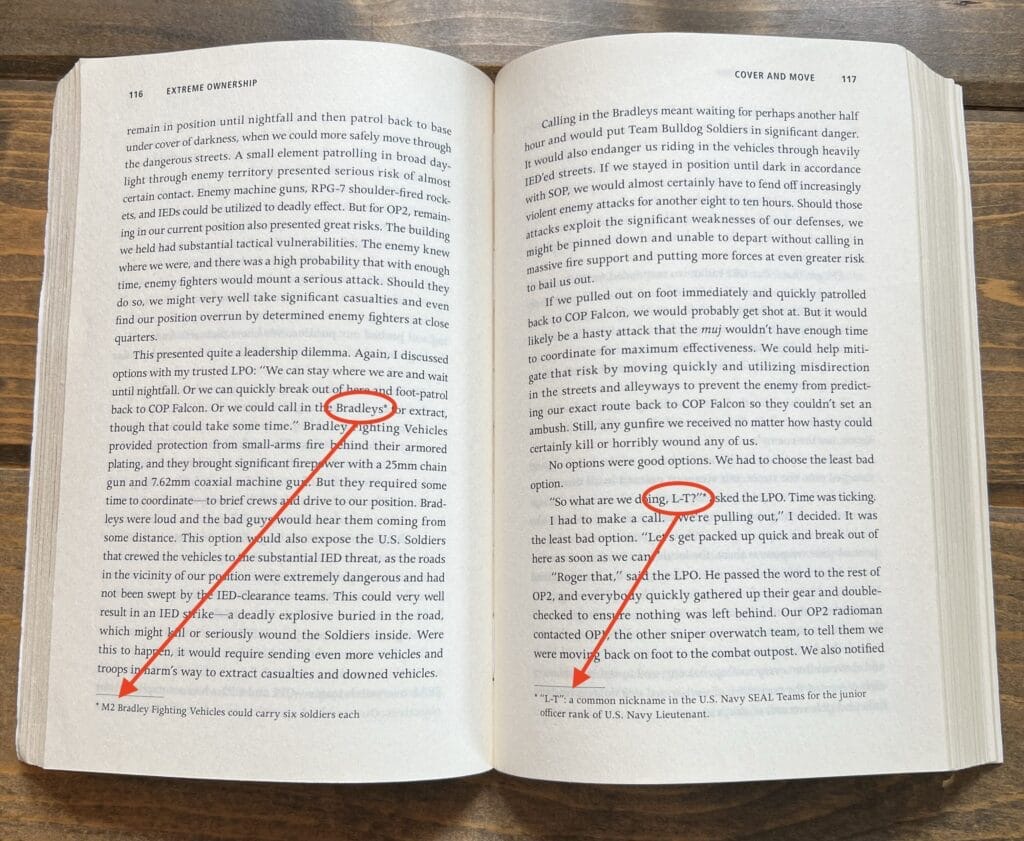
I remember an exam question from college that I missed because I had no clue what the answer was. The question was based on a text we were supposed to read, and the answer would have been found in a footnote of the main text. Footnotes are notes placed at the bottom of a page that provide citations, additional context, or copyright permissions for specific parts of the text. They are usually identified by a small number or letter that tells you to look at the bottom of the page for further information. But who reads them? If the information is so important, why didn’t the author include it in the main text? Who has time for footnotes? And who wants to read them?
Often in our day-to-day lives, when we encounter one another, we ask, “How are you?” Our typical response is, “I’m good or fine.” This is usually the main text of our lives, a few short words that summarize how life is going. However, that summary is often merely a polite response to what would be a complicated answer. Rarely are our lives completely good or fine. Most of us are dealing with issues, problems, concerns, and stresses that create anxiety and worry, which we carry around with us like luggage through a crowded airport. Hence, our responses of “I’m fine or good,” if examined closely, often have footnotes.
As a pastor for the last 35 years, all at the same church, I have come to the conclusion that most of us offer pleasant responses to the question of “how are we doing,” but the footnotes often reveal something different. Our faith does not promise us lives without burdens or struggles that often weigh down our stories. Instead, our stories can be easily annotated with notes of grief, pain, fear, sorrow, anger, and brokenness. When we take time to listen to one another’s stories, we begin to realize how much we share in common with the broken prose of the world.
However, not every footnote is about our brokenness. Nestled in the notes are the joys of life: birth, hope, promises, beauty, friendship, love, forgiveness, peace, and many more. These experiences enrich our lives far beyond “I’m fine or good.” Blessed may be the better word that brings our stories together at these points.
The good news is that the author of our stories is thoughtful and compassionate in his writing. God is writing a story that is not yet complete. While our lives may be footnoted with both joy and sorrow, we can trust that when all is written, the question of how we are doing can be honestly answered, “I’m good,” with nothing else to add. As Paul would state in Philippians 1:6 – “Being confident of this, that he who began a good work in you will carry it on to completion until the day of Christ Jesus.”
Until then, let us be patient and kind with one another. Let us recognize that everyone’s life is marked by both joy and sorrow. “I’m good” may be our response in casual conversations, but there may be more to a person’s story, just as there is more to our own. So, pay attention to one another’s footnotes whenever you can. It makes a difference in how you understand the life before you.


Leave a Reply