

Church, do we really matter?
I ask myself that question more often than I used to—not only as a pastor, but as a Christian. I ask it when I pull into the church parking lot on Sunday morning. I pass people riding bicycles, walking their dogs, playing in the park with their children, heading to work, traveling to weekend activities, or simply enjoying a quiet morning. Life is happening all around us.
And then I arrive at church.
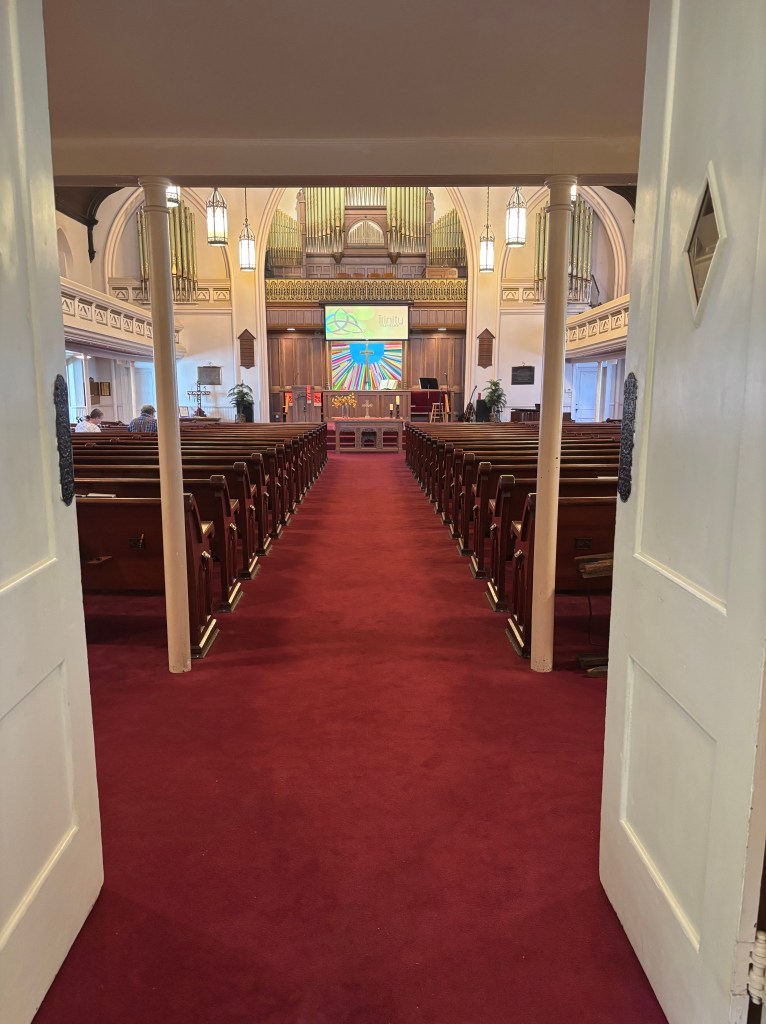
I’ve been coming to this same church for thirty-five years. The congregation is smaller than it once was. Attendance isn’t what it used to be. Yet every Sunday, faithful people still gather. We sing. We pray. We encourage one another. We open the Scriptures. God’s Word is read, proclaimed, and taught. We remember who we are, and whose we are. It still matters to us. It certainly matters to me.
But I can’t help wondering about all those people we passed on the way here.
Does the church matter to them anymore? Does worship at eleven o’clock on a Sunday morning still speak to their lives? If our church disappeared tomorrow, would anyone outside these walls even notice?
Those are not easy questions, but they are honest ones. They’re questions I hear echoed by pastors everywhere. We wonder what we still have to offer.
The good news of Jesus Christ has never changed. The gospel is still good news.
But something has changed.
Perhaps people have not rejected the story as much as they have lost trust in the storytellers. Maybe the church has damaged its own witness through pride, division, hypocrisy, or abuse of trust. Perhaps our reputation has made it difficult for people to hear the message we proclaim. In many cases, people have good reasons to be cautious.
Yet I still believe the story is worth telling.
So my struggle today isn’t whether the gospel still matters. It does. My struggle is learning how to communicate it in a world that no longer automatically comes through our doors.
I’ve discovered that I can no longer measure the church primarily by Sunday morning attendance. If I do, discouragement comes quickly.
Instead, I’ve found myself spending more of my ministry during the rest of the week—in conversations over coffee, on neighborhood sidewalks, at community events, visiting people where they are, listening more than speaking, building friendships one person at a time.
I’ve become less concerned with why people aren’t showing up at church and more concerned with why the church isn’t showing up in their lives.
Maybe that’s the question we need to ask.
Not, “Why aren’t they coming?”
But, “Where are we going?”
Jesus rarely waited for people to find him. He walked the roads. He entered villages. He sat at tables. He met people where they lived, worked, struggled, and hoped. His ministry was always moving toward people.
Perhaps ours should be as well.
Maybe the future of the church isn’t found in getting more people into our pews as much as it is in getting more followers of Jesus into the neighborhoods, workplaces, coffee shops, schools, parks, and streets where people already live.
Our calling is not simply to invite people to church.
Our calling is to be the church.
To be good neighbors.
To build trust.
To practice kindness.
To listen.
To serve.
To love people with no strings attached.
And as we do, the gospel becomes visible long before it is spoken.
Connections are formed. Friendships grow. Hearts begin to open. People encounter Christ not first through a sermon, but through someone who cared enough to show up.
Maybe that’s what makes the church relevant again.
Not because our buildings are full.
Not because our programs are impressive.
But because our lives reflect the love of Christ wherever God sends us.
So yes, I still believe the church matters.
Perhaps now more than ever.
But maybe it’s less about people showing up on Sunday morning…
…and more about whether we are willing to show up for them on Monday morning.
To be with them.
To walk beside them.
To love them.
That’s what it means to be the church.
And that’s what will always matter.


Leave a Reply