

When I was growing up, my great-aunt Grace lived with my grandparents in rural North Carolina. They attended a small country Baptist church, and whenever we visited on Sundays, we usually went to worship with them.
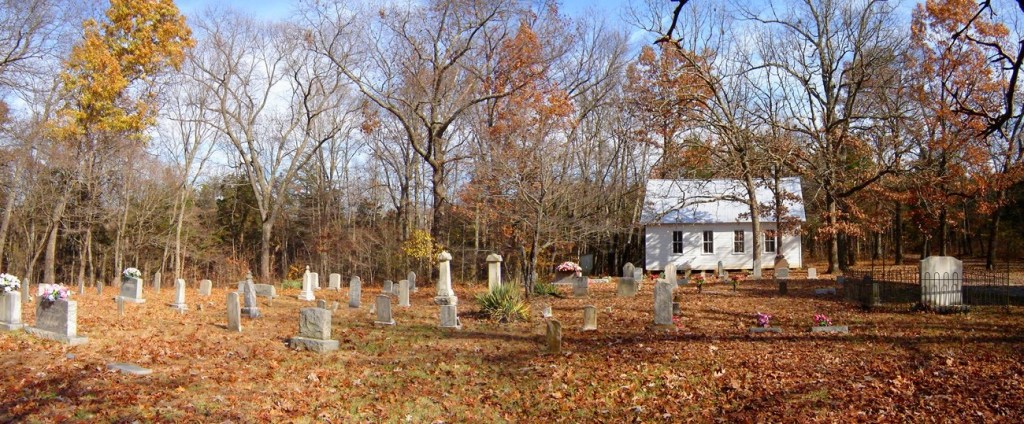
Like many little country churches, there was a cemetery right beside the church. After worship, while the adults stood around talking, my cousins and I would often wander through the cemetery and play among the tombstones.
There was one tombstone that always puzzled me.
It had my Aunt Grace’s name on it.
The strange thing was that Aunt Grace was very much alive.
As a child, I could not understand it. Tombstones were for dead people. I knew that much. Yet there was Aunt Grace, walking around, talking, laughing, eating Sunday dinner with us—and out in the cemetery was a stone bearing her name.
I remember wondering, Why does Aunt Grace have a tombstone if she isn’t dead?
Years later, of course, I understood.
The burial plot had been purchased. The stone had been placed there in preparation for the day when her earthly life would come to an end. Aunt Grace knew that one day her body would be laid beneath that stone.
But I believe she also knew something greater.
She knew the tombstone would not have the final word.
Jesus stood outside the tomb of his friend Lazarus and said to Martha:
“I am the resurrection and the life. The one who believes in me will live, even though they die.”
Those words from John 11 are among the most powerful words Jesus ever spoke.
Notice that Jesus did not merely say, “I will give resurrection.”
He said, “I am the resurrection.”
Our hope is not simply that something wonderful will happen to us after death. Our hope is in Jesus Christ himself.
Mary and Martha knew the reality of death. Their brother was gone. They were grieving. Their house was filled with sorrow, questions, and tears.
Jesus did not pretend death was insignificant. In fact, Jesus wept.
Christian faith does not ask us to deny the pain of death. We grieve because we love. We hurt because someone mattered to us.
But grief is not the same thing as hopelessness.
Jesus stood in the presence of death and declared that death does not have ultimate authority.
That childhood memory of Aunt Grace’s tombstone means something different to me now.
As a boy, I thought it was strange that a living woman had her name engraved on a stone in a cemetery.
Now I see something almost beautiful about it.
The stone acknowledged a truth that all of us must eventually face: our earthly lives will come to an end.
We spend a great deal of our lives trying not to think about that. We avoid cemeteries. We avoid conversations about death. We sometimes act as if ignoring mortality will somehow keep it away.
Aunt Grace’s tombstone stood quietly in that little country cemetery acknowledging what Scripture has always told us: our days on this earth are limited.
But faith allows us to acknowledge that truth without being ruled by it.
There is another truth.
In Christ, death is never the whole story.
Eventually, Aunt Grace died.
The woman whose name had been waiting for years on that tombstone was finally laid to rest beneath it.
But I do not believe that stone tells the whole story of Aunt Grace.
A tombstone can record a name.
It can record a birth date.
It can record a death date.
It can even contain a few words describing the life that was lived between those two dates.
But it cannot record the final promise of God.
The final promise is resurrection.
The final promise is life.
The final promise is Christ.
Perhaps that is why Christians can stand in cemeteries with tears in our eyes and still speak words of hope. We do not pretend death is painless. We do not pretend separation does not hurt.
We simply believe there is something beyond the stone.
Aunt Grace’s name had been carved into that tombstone long before she died.
As a little boy, I thought that was terribly strange.
Today I understand it differently.
That stone acknowledged one truth: Aunt Grace would die.
But her faith rested upon a greater truth:
Death would not have the last word.
The last word belongs to Jesus:
“I am the resurrection and the life.”


Leave a Reply