

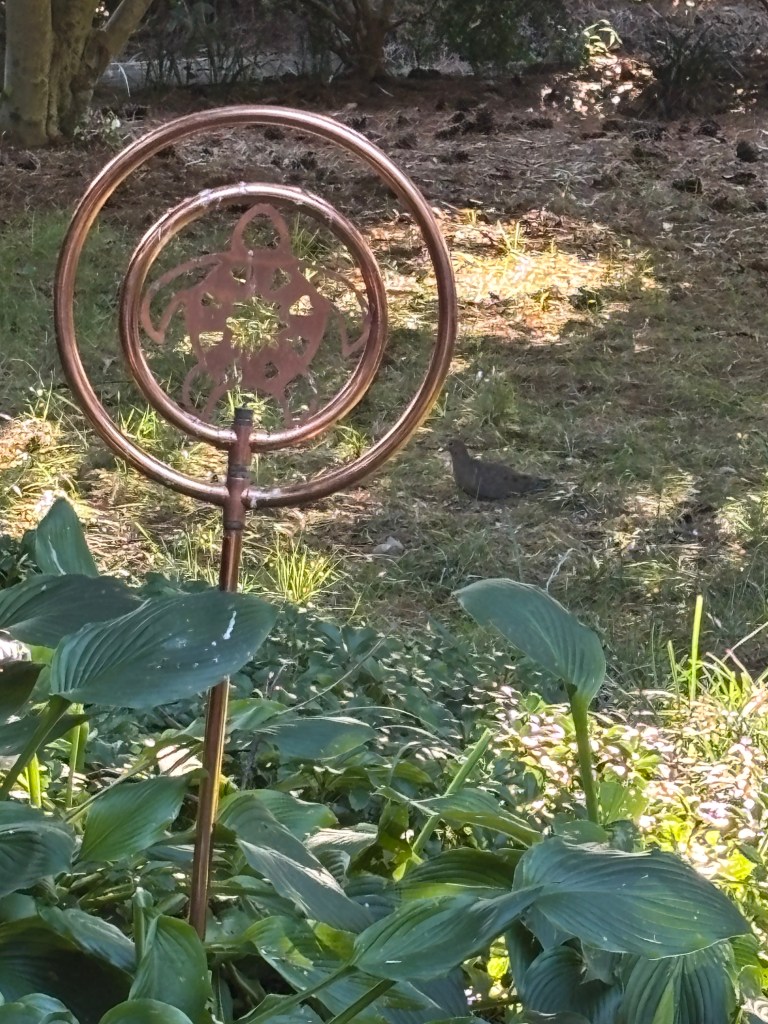
There is only one dove in our yard today.
That probably would not mean much to most people, but I noticed.
There are usually two.
They fly into the yard together, walk around in the grass together, eat together, and eventually fly away together. They have been doing it for so long that it feels like seasons have passed with those same two doves appearing in our backyard.
But today, there is only one.
I found myself watching it for a while and wondering where the other one was.
Did something happen to it? Is it sick? Did it get injured? Or, worse, did it die?
Then I started wondering about the dove that was still there.
Does it notice that its partner is missing? Does it realize that it is eating alone today? Does it wonder where the other one has gone?
Does a dove even experience absence like that?
I would think it must, at least in some way. It seems like it would be strange to share your days with another creature for so long and then suddenly find yourself alone.
Of course, maybe I am reading far too much into the whole thing.
Maybe the other dove is perfectly fine. Maybe this one knows exactly where its companion is. Perhaps tomorrow morning I will look outside and see the two of them together again, walking through the grass as if nothing ever happened.
I hope so.
But today there is only one.
And watching that lone dove made me think about how many people know what it is like to suddenly become one when they have spent so much of their lives being two.
There are people who have eaten across the table from the same person for forty, fifty, or sixty years. They have gone grocery shopping together, watched television together, gone to church together, taken vacations together, raised children together, argued together, laughed together, sat quietly together, and gone to sleep beside one another night after night.
Then one day, there is only one.
One chair at the table is empty.
One side of the bed is untouched.
One voice is missing from the conversation.
One person now walks into church, the grocery store, or the doctor’s office alone.
When I counsel young couples preparing for marriage, I sometimes remind them of one of the difficult truths that comes with loving another person for a lifetime:
Eventually, someone has to say goodbye first.
It is something we rarely think about when love is young.
We think about beginnings. Weddings. Homes. Children. Vacations. Anniversaries. Growing old together.
We do not like to think about the day when “together” becomes “alone.”
But that possibility is woven into the very gift of loving someone.
Grief, in many ways, is the price we pay for having loved deeply.
When someone we love is gone, even the ordinary things of life become unfamiliar. Eating supper. Watching television. Driving somewhere. Making decisions. Going to church. Getting ready for bed.
The activities are still the same, but everything feels different because the person who shared them with us is no longer there.
Grief leaves an empty place.
In time, people learn how to live around that emptiness. They develop new routines. They discover strength they did not know they had. They laugh again. They find moments of joy. They keep living.
But I am not sure the empty place ever completely disappears.
Maybe it should not.
That empty place exists because someone once filled it.
Because someone mattered.
Because there was love.
So today I am watching one dove walk through the grass in our backyard.
Maybe tomorrow there will be two again.
I hope there will be.
But today there is only one.
And somehow that little dove has reminded me that love is one of life’s greatest gifts, even though loving someone always carries the risk that one day we may have to learn how to live without them.
So is life.
So is grief.
So is the price—and perhaps also the privilege—of having loved.
 Conversations from the Couch
Leave a comment